
The Victron Energy SmartSolar MPPT takes our top spot for 2026 — its Bluetooth-enabled tracking algorithm squeezes every watt from your panels, even under partial shade. If you're building or upgrading a solar system this year, the charge controller you pick determines how efficiently your panels charge your batteries, how long those batteries last, and whether your system can scale with your needs.
Solar charge controllers have come a long way from basic PWM regulators. Today's MPPT controllers routinely hit 99%+ conversion efficiency, support lithium chemistries out of the box, and offer smartphone monitoring. Whether you're wiring up an off-grid cabin, outfitting your RV for full-time travel, or expanding a residential array, the right controller matches your panel voltage, battery bank, and amperage demands without overspending. We spent weeks comparing specs, real-world performance data, and user feedback across dozens of models to narrow the field down to these seven standouts.
Below you'll find our detailed breakdowns of each controller, a buying guide covering the specs that actually matter, and answers to the most common questions we hear from solar installers and DIY builders. If you're also shopping for batteries to pair with your new controller, check out our guide to the best solar deep cycle batteries for 2026.
Contents







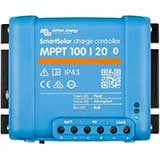
Victron has earned its reputation in the solar industry for good reason, and the SmartSolar MPPT 100/30 is the embodiment of that track record. This 30-amp controller handles 12V and 24V systems with a maximum PV open circuit voltage of 100V, giving you solid headroom for series-wired panel configurations. The built-in Bluetooth connectivity is the headline feature here — you get real-time monitoring, history logging, and full parameter adjustment right from the VictronConnect app on your phone. No extra dongles, no separate displays to buy.
What sets the Victron apart from nearly every competitor at this price point is its ultra-fast maximum power point tracking algorithm. It adapts to changing light conditions in milliseconds, which means passing clouds and partial shade don't tank your harvest the way they would with slower controllers. The intelligent charge algorithm supports multiple battery types including lithium, and it automatically adjusts parameters to maximize battery lifespan. If you run multiple panels in a larger system, you can synchronize several SmartSolar controllers so they behave as a single unit — coordinating charge stages across your entire battery bank.
Build quality is excellent. The aluminum housing dissipates heat efficiently without a fan, the terminals accept appropriately sized wire for 30A service, and the unit is compact enough to mount in tight spaces. For RVs, boats, and small to mid-size off-grid setups, this is the controller we recommend first.
Pros:
Cons:
When your solar array outgrows a 30A or 40A controller, the Renogy Rover Lite 60A steps up without breaking the bank. The standout spec here is the 150V maximum solar input, which lets you string up to six Renogy 200W panels in series. That series configuration means thinner wire runs, fewer combiner boxes, and lower installation costs — a real advantage for workshops, large RVs, or cabin builds where your panels sit a distance from your battery bank.
Renogy engineered this controller for harsh environments. It operates at full 60A load from -31°F to 113°F, which covers everything from Minnesota winters to Arizona summers. The built-in low-temperature lithium protection is a thoughtful touch — it automatically halts charging when your LiFePO4 cells drop below safe temps, preventing the kind of damage that shortens battery life dramatically. The self-cooling design keeps things running efficiently even during peak summer production without a noisy fan.
System compatibility is another strong suit. The Rover Lite 60A auto-detects 12V, 24V, 36V, and 48V battery configurations and works with AGM, gel, flooded, and lithium chemistries. That 48V support opens the door to serious off-grid installations where higher voltage means lower current and reduced wire losses. If you're planning a system that needs to grow, this controller has the headroom to grow with it.
Pros:
Cons:
EPEVER has carved out a strong niche in the budget-to-mid-range segment, and the 40A MPPT controller represents their best balance of capability and price. With a 100V maximum PV open circuit voltage and support for up to 520W on 12V systems (1040W on 24V), you get plenty of capacity for a standard residential or RV solar setup without the cost of premium brands.
The MPPT tracking efficiency is rated at 99.5%, which puts it right alongside controllers costing twice as much. The auto-detecting 12V/24V system voltage simplifies installation — wire it up and the controller figures out your battery bank configuration. Where EPEVER really shines is battery chemistry support. It handles sealed lead-acid, gel, flooded, LiFePO4, and lithium NiCoMn, plus a user-defined mode for custom charge profiles. The four load control modes (manual, light on/off, light on + timer, and test) add flexibility for lighting applications where you want automated dusk-to-dawn switching.
The common negative grounding design is standard for the industry and makes integration with existing systems straightforward. Build quality is solid for the price — the unit feels well-constructed and the terminals accept appropriately sized conductors. If you're building a mid-size system on a budget and don't need Bluetooth or 48V support, this EPEVER delivers where it counts.
Pros:
Cons:
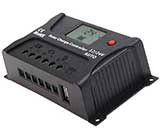
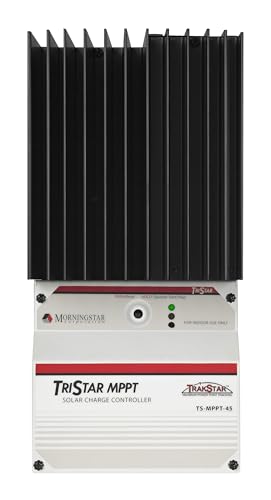
The Morningstar TriStar 45A is the controller you choose when reliability isn't negotiable. Built in the USA with a 5-year warranty, this unit is designed for professional and commercial solar installations where downtime costs real money. The 99% peak efficiency comes from Morningstar's proprietary tracking algorithms, and it runs at full rated power up to 45°C without any derating — a spec that matters in hot climates or enclosed equipment rooms.
What truly separates the TriStar from consumer-grade controllers is its networking and communications stack. It supports MODBUS protocol, Ethernet connectivity with web-based monitoring, email and text alerts, and SNMP for integration into enterprise network management systems. You can log data, adjust parameters remotely, and monitor system health from anywhere with an internet connection. For installers managing multiple sites, this is transformative. The MS View software provides deep diagnostic capabilities that go well beyond what a smartphone app offers.
The fanless passive heat sink uses over-spec'd components to minimize thermal losses, which also contributes to the unit's legendary reliability. It supports 12V, 24V, 36V, and 48V systems and works with both lead-acid and lithium batteries. The TriStar is compatible with a wide range of solar module types and array configurations. Yes, you'll pay more upfront, but for critical systems — telecommunications towers, medical facilities, remote monitoring stations — the TriStar's track record justifies every dollar.
Pros:
Cons:
The Renogy Rover 40A is the go-to recommendation for RV owners and marine applications, and it's easy to see why. The dual-peak MPPT tracking algorithm handles the real-world challenges of mobile solar — passing shade from trees, intermittent cloud cover, and the constantly shifting angles you deal with on a moving vehicle. Renogy claims 99.9% multi-peak efficiency, and in practice, this controller consistently outperforms single-peak trackers when conditions get messy.
Durability in harsh conditions is where the Rover 40A earns its keep. The operating temperature range spans from -40°F to 149°F with automatic temperature compensation that adjusts charging parameters in real time. TVS protection rated for 6kV lightning surges is a standout spec for marine and RV users who can't always control their grounding environment. Reverse polarity and overload protection add additional safety layers that give you peace of mind during DIY installations.
The 4-stage charging algorithm (Bulk, Absorption, Float, Equalization) maximizes battery health across gel, sealed, flooded, and lithium chemistries. Renogy's exclusive lithium battery recovery feature can revive deeply discharged LiFePO4 cells that other controllers would refuse to charge — a genuine lifesaver if you accidentally drain your house bank while boondocking. The LCD display provides clear real-time data, and auto-detection handles 12V/24V systems. If you're looking to pair a charge controller with a trolling motor setup, our solar charger for trolling motor battery guide covers compatible options.
Pros:
Cons:
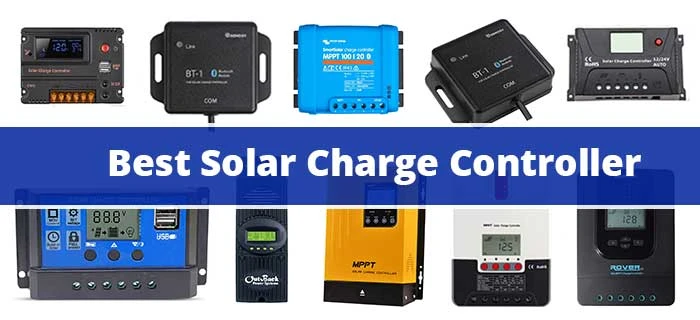
Not every solar system needs an MPPT controller. If you're running a small 12V system with one or two panels where the panel voltage closely matches your battery voltage, a well-built PWM controller saves you money without sacrificing reliability. The Morningstar SunSaver 20A is the gold standard in this category — designed in the USA with Morningstar's commercial-grade build quality packed into a compact, affordable package.
The SunSaver uses a series PWM topology with four-stage charging that genuinely extends battery life compared to cheaper PWM controllers that use basic on/off switching. Temperature compensation adjusts charge voltage automatically based on ambient conditions, and you can select between sealed and flooded battery profiles. The 3-state LED indicator gives you quick visual feedback on battery status without needing to pull out your phone or connect to a display. Dead battery recovery mode can bring severely discharged batteries back from the brink.
Installation is as simple as it gets. Factory pre-sets eliminate the need for programming or parameter adjustment — connect your panels, connect your battery, and the SunSaver handles the rest. Electronic protections guard against wiring mistakes, which is a genuine benefit for first-time installers. The included wire terminal cover is a small but appreciated touch for clean, safe installations. With a HazLoc rating for hazardous locations and near-silent operation, this controller fits applications where noise and safety certifications matter. The 5-year warranty backs it all up.
Pros:
Cons:
The EPEVER 10A MPPT is proof that you don't need to sacrifice MPPT efficiency just because your system is small. Rated for 130W on 12V systems or 260W on 24V, this compact controller is sized perfectly for a single-panel setup on a small RV, boat, or shed. You get the same 99.5% tracking efficiency and 100V maximum PV voltage as its 40A sibling, just in a smaller current package.
The feature set mirrors the larger EPEVER models almost exactly. You get the same six battery chemistry profiles (sealed, gel, flooded, LiFePO4, lithium NiCoMn, and user-defined), the same four load control modes for automated lighting, and the same common negative grounding design. Auto-detecting 12V/24V operation means this little controller can grow with you if you upgrade from a 12V to a 24V system down the road.
For the price, the EPEVER 10A delivers remarkable value. It's a true MPPT controller — not a PWM unit marketed with inflated efficiency claims. If you're maintaining a battery on a remote gate opener, powering a small security camera system, or keeping your weekend fishing boat topped off between trips, this is the right tool for the job. Don't overspend on a 40A controller when 10A is all your system draws.
Pros:
Cons:
This is the first decision you need to make, and it comes down to your panel and battery voltage relationship. MPPT (Maximum Power Point Tracking) controllers convert excess panel voltage into additional charging current, delivering 20-30% more energy than PWM controllers when your panel voltage is significantly higher than your battery voltage. That efficiency gap grows even wider in cold weather when panel voltage rises.
PWM (Pulse Width Modulation) controllers work by directly connecting the panel to the battery and rapidly switching the connection on and off to regulate voltage. They're simpler, cheaper, and perfectly adequate when your panel's nominal voltage matches your battery bank — like a single 12V panel charging a 12V battery. For anything larger or more complex, MPPT pays for itself through increased energy harvest. The U.S. Department of Energy's research on MPPT technology confirms the efficiency advantages in real-world conditions.
Your charge controller's amperage rating must handle the maximum current your solar array can produce. The formula is straightforward: divide your total panel wattage by your battery bank voltage. A 400W array on a 12V system produces roughly 33A, so you'd need at least a 40A controller with some headroom.
Always size up, not down. Running a controller at its absolute maximum rating generates excess heat, reduces lifespan, and leaves no room for those rare but real moments when your panels produce more than their rated output. A 10-20% buffer above your calculated maximum is standard practice. If you're planning to add panels later, factor that into your sizing now — replacing a controller is more expensive than buying the right one upfront.
Modern charge controllers support multiple battery chemistries, but the charging profiles for each type are fundamentally different. Lithium (LiFePO4) batteries require a flat charge curve with precise voltage cutoffs, while lead-acid types need multi-stage charging with absorption, float, and equalization phases. Using the wrong profile damages batteries — sometimes permanently.
If you're running lithium batteries, verify that your chosen controller offers proper LiFePO4 profiles with low-temperature cutoff protection. Charging lithium cells below freezing causes lithium plating on the anode, which irreversibly reduces capacity. Controllers like the Renogy Rover Lite 60A include automatic low-temperature protection that halts charging when cell temperature drops below safe thresholds. For a deeper look at pairing batteries with your solar setup, see our guide on choosing solar panels for your home.
How much visibility do you need into your system's performance? Basic controllers offer LED indicators and maybe a small LCD screen. Mid-range units add Bluetooth connectivity with smartphone apps. Professional-grade controllers like the Morningstar TriStar provide full Ethernet networking, MODBUS protocol support, web-based monitoring, and SNMP integration.
For most residential and RV installations, Bluetooth monitoring is the sweet spot. You can check daily harvest numbers, monitor battery state of charge, and adjust parameters from your couch. If you're managing multiple sites or need historical data for system optimization, the added cost of a networked controller with data logging pays dividends through better long-term performance tuning.
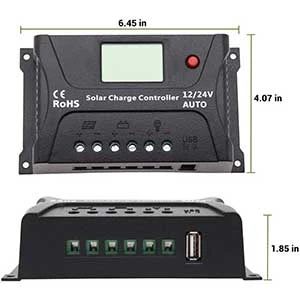
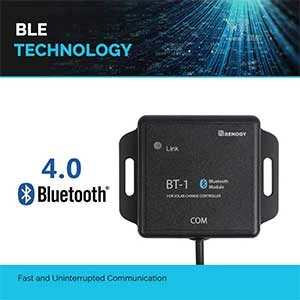
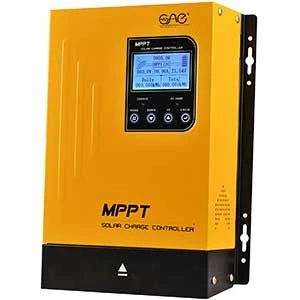
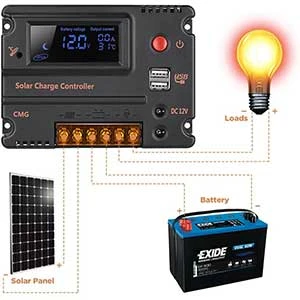
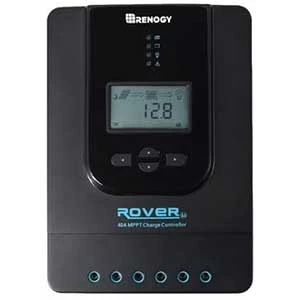
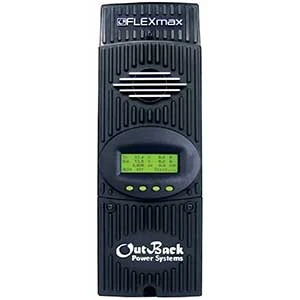
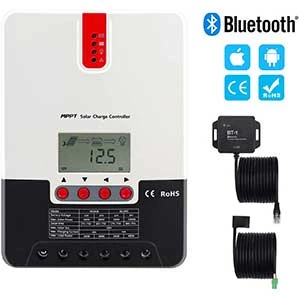

MPPT controllers convert excess solar panel voltage into additional charging current, delivering 20-30% more energy than PWM controllers in most real-world conditions. PWM controllers directly connect panels to batteries through rapid switching and work best when panel and battery voltages closely match. For systems larger than a single panel or where panel voltage exceeds battery voltage significantly, MPPT is the clear winner. PWM controllers cost less and work fine for simple, small setups where the voltage match is close.
Divide your total solar panel wattage by your battery bank voltage to get the minimum amperage rating. For example, 600W of panels on a 24V battery bank requires at least a 25A controller (600 ÷ 24 = 25). Add a 20% safety buffer, bringing you to a 30A controller minimum. Always round up to the next available size. For the PV voltage input rating, check your panels' open circuit voltage (Voc) and make sure it stays below the controller's maximum — especially in cold weather when Voc increases.
Yes, and in 2026 most quality MPPT controllers include dedicated lithium (LiFePO4) charging profiles. The key requirement is proper voltage cutoff settings — lithium batteries need precise charge termination voltages without the equalization or float stages used for lead-acid. Look for controllers with built-in low-temperature protection that prevents charging below 32°F, as charging lithium cells below freezing causes permanent internal damage. The Renogy Rover Lite 60A and both EPEVER models on this list include proper lithium profiles.
Yes, but output drops significantly. MPPT controllers maintain their efficiency advantage over PWM on cloudy days because they continuously optimize the operating point of your panels as light levels change. A quality MPPT controller with fast tracking — like the Victron SmartSolar — adjusts in milliseconds to passing clouds, ensuring you capture every available watt. On overcast days, you can expect roughly 10-25% of your full-sun production depending on cloud thickness, but an MPPT controller ensures you're getting the maximum possible from whatever light is available.
Absolutely. Running multiple controllers in parallel is a standard approach for larger systems. Each controller manages its own panel array independently and feeds current into the shared battery bank. The Victron SmartSolar lineup takes this further with synchronized charging, where multiple controllers coordinate their charge stages to optimize battery health. When using controllers from different brands, they'll still work together — each one independently regulates its output based on battery voltage — but you won't get the coordinated stage-switching that matched controllers provide.
A quality solar charge controller lasts 10-15 years under normal operating conditions. The main enemies of longevity are excessive heat, voltage spikes from lightning, and running at or above rated capacity continuously. Fanless designs like the Victron SmartSolar and Morningstar TriStar eliminate the most common mechanical failure point. Proper sizing — choosing a controller rated above your system's maximum output — reduces thermal stress and extends lifespan. Morningstar backs the TriStar and SunSaver with 5-year warranties, which is the longest standard coverage in this roundup.
The right solar charge controller depends on your system size, battery chemistry, and how much monitoring you need. For most builders in 2026, the Victron SmartSolar MPPT 100/30 hits the sweet spot of efficiency, connectivity, and reliability — but if you're scaling up, the Renogy Rover Lite 60A gives you serious headroom without a premium price tag. Match the controller to your actual panel wattage and battery bank voltage, leave yourself room to grow, and your solar energy system will reward you with years of efficient, hands-off power production. Pick the one that fits your setup today and start harvesting.


About Malcolm Woods
Malcolm Woods is a technology writer and sustainability advocate with a background in consumer electronics and a long-standing interest in the intersection of technology and environmental impact. He has spent years evaluating tech products — from smartphones and smart home devices to solar-powered accessories — with a focus on real-world performance, longevity, and value. At the site, he covers tech accessory reviews, smart home gear, buying guides, and practical how-to content for everyday technology users.
Go for the FREE Gifts. Or check out for free energy books from our best collection.
Remove Ad block to reveal all the secrets. Once done, hit a button below