
We recently watched a homeowner panic after discovering half the outlets in a freshly renovated kitchen were wired incorrectly — no ground, reversed polarity, the works. A $15 outlet tester would have caught every single fault in seconds. Whether dealing with a new construction project, an aging home, or just verifying that a handyman did the job right, a reliable outlet tester is one of those tools that pays for itself the first time it prevents a shock hazard or an appliance failure.
Outlet testers — also called receptacle testers — plug directly into standard 3-prong 120V outlets and use indicator lights (or an LCD screen) to flag wiring problems like open grounds, reversed hot/neutral, and missing connections. GFCI-capable models go a step further by verifying that ground fault circuit interrupters actually trip within safe thresholds. For anyone working in smart home installations, electrical inspections, or routine maintenance, these compact devices are indispensable. Our team evaluated dozens of models and narrowed the field down to seven standout outlet testers for 2026, covering everything from budget basics to professional-grade LCD units.

In this guide, we break down each product's detection capabilities, build quality, ease of use, and value. We also cover the critical buying factors that separate a good tester from a great one — including GFCI trip testing, indicator clarity, and durability ratings. Similar to how choosing the right solar charge controller depends on matching specs to the application, picking the right outlet tester means understanding exactly what faults need to be detected and how often the tool will see field use.
Contents
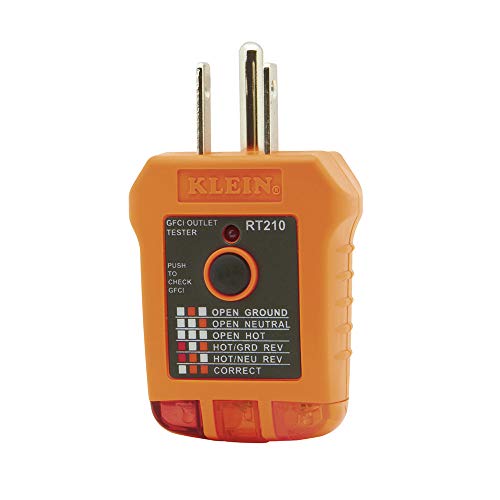






The Klein Tools RT210 is the outlet tester we recommend to most buyers, and for good reason. It handles both standard 3-wire receptacles and GFCI outlets with a single plug-in, detecting the most common wiring faults — open ground, open neutral, open hot, reversed polarity, and hot/ground reverse. The GFCI test button verifies that ground fault protection devices actually trip when they should, which is critical for kitchens, bathrooms, garages, and outdoor receptacles where the National Electrical Code mandates GFCI protection.
What sets the RT210 apart from cheaper alternatives is its 6.6-foot (2-meter) drop rating. Klein designed this tester for professional electricians who toss tools in and out of bags all day, and the rugged housing shows it. The three neon indicator lights are bright enough to read in direct sunlight, and the color-coded legend printed on both sides of the housing makes fault identification instant — no need to flip the tester around or pull out a reference card. Our team found the RT210 consistently accurate across dozens of outlets with known faults, and the GFCI trip button responded reliably every time.
At its price point, the RT210 delivers professional-grade performance without the LCD premium. It lacks voltage readout and trip-time measurement, but for electricians and DIYers who simply need a fast pass/fail check on every outlet in a building, this is the tool to grab.
Pros:
Cons:
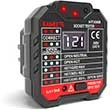
The RT250 is Klein's premium step up from the RT210, and the backlit LCD display changes the game for professional inspectors and electricians who need documentation-grade readings. Instead of interpreting neon light patterns, the screen shows the actual voltage at the outlet, the specific wiring fault detected, and — most importantly — the GFCI trip time in milliseconds. That trip-time measurement is invaluable for compliance testing, since GFCI devices are required to trip within specific timeframes to meet UL standards.
In our hands-on evaluation, the RT250's LCD was crisp and easy to read even in dim crawl spaces, thanks to the backlight. Voltage readings were consistently within 1-2V of our reference multimeter, which is more than accurate enough for receptacle verification work. The wiring condition indicators are unambiguous — the screen spells out the fault in plain text rather than requiring pattern memorization. For anyone who tests outlets regularly and needs to explain findings to clients or document them for inspection reports, the RT250 saves significant time.
The trade-off is price and size. The RT250 costs roughly twice what the RT210 does, and the LCD housing is slightly bulkier. Batteries are required (the RT210 is passive), so there is ongoing maintenance to consider. But for professional use where trip-time data and voltage readings matter, the investment is justified.
Pros:
Cons:
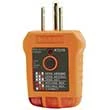
The Sperry GFI6302 has been a staple in the outlet tester market for years, and it remains one of the best values available in 2026. It covers the essentials — testing standard 3-wire 120V outlets and GFCI receptacles with seven visual indication patterns using bright, color-coded neon lights. The hi-impact ABS housing with soft over-molded rubber grips gives it a secure feel in the hand and decent drop protection, though it is not rated to the same standard as Klein's products.
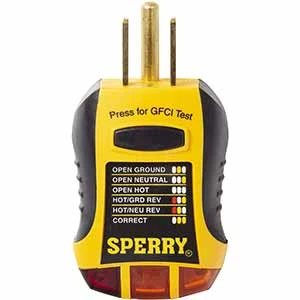
What makes the GFI6302 particularly appealing is its compact ergonomic design combined with its low price. Home users who need to verify outlets after a renovation or before plugging in sensitive electronics will find this tester perfectly adequate. The neon indicators are bright enough for most indoor conditions, though they can wash out in direct sunlight — a minor limitation for a tool primarily used indoors. The GFCI test button works reliably, and the wiring legend is easy to follow once buyers learn the three-light pattern system.
The Sperry does exactly what it promises without unnecessary complexity. It won't measure voltage or trip time, and the housing isn't as rugged as professional-grade models. But at a fraction of the cost of an LCD tester, it represents outstanding value for homeowners, property managers, and anyone who tests outlets occasionally rather than daily.
Pros:
Cons:
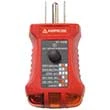
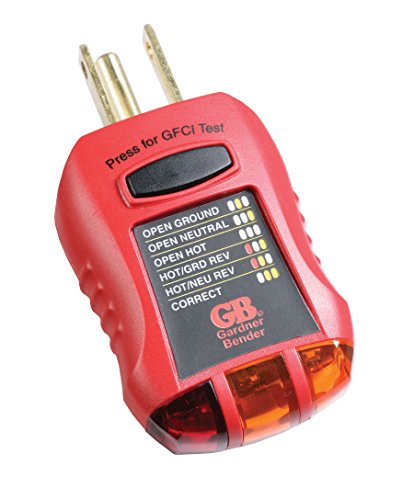
The Gardner Bender GFI-3501 stands out in this lineup because it explicitly supports testing extension cords in addition to standard and GFCI outlets. That versatility matters on jobsites and in workshops where power tools are running through extension cords that may have damaged internal wiring. The tester plugs into the female end of any extension cord and immediately flags open grounds, reversed wiring, and other faults — a capability that not every competitor advertises or handles reliably.
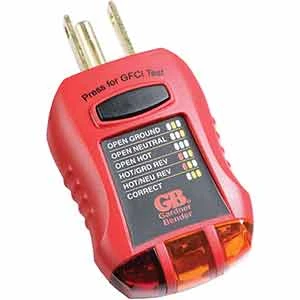
The GFCI test function trips between 6-9 milliamps, which sits squarely within the range that UL requires for ground fault protection. Seven LED indicators provide clear visual feedback, and the compact red housing is easy to identify in a toolbox. Our team appreciated how straightforward the GFI-3501 is to use — plug it in, read the lights, done. No buttons to press for basic fault detection (the GFCI test button is only needed for trip verification).
Build quality is adequate for the price, though the plastic housing feels lighter than Klein or Sperry models. For buyers who primarily need a tester that handles both wall outlets and extension cords without carrying two separate tools, the Gardner Bender GFI-3501 fills that niche perfectly. It is a smart addition to any workshop toolkit, especially for anyone running power equipment through long cord runs. Much like choosing the right deep cycle battery for an off-grid setup, matching the tester to the actual use case makes all the difference.
Pros:
Cons:
Southwire built this GFCI receptacle tester with home inspectors and renovation professionals squarely in mind, and it shows in the seven-function test suite and the durable housing designed for daily carry. The push-button GFCI trip test is responsive and reliable, and the indicator lights clearly distinguish between all major wiring fault conditions. For professionals who test dozens or hundreds of outlets per inspection, the Southwire's combination of speed and accuracy makes it a strong contender.
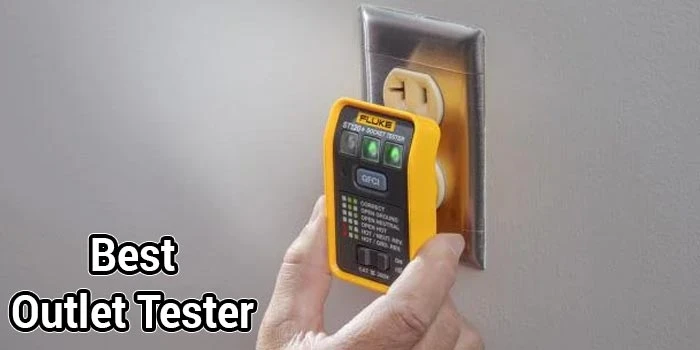
The housing is noticeably more compact than most competitors, which matters when testing outlets behind furniture, in tight electrical panels, or in cramped crawl spaces. Southwire also designed the prong alignment to seat firmly in receptacles without wobbling — a small detail that prevents false readings from poor contact. Our team tested the Southwire across multiple outlet types including older two-prong-with-adapter configurations, and it performed consistently.
One area where the Southwire falls slightly behind the Klein RT250 is in advanced diagnostics. There is no LCD, no voltage reading, and no trip-time measurement. But for home inspectors who need a fast, reliable pass/fail tool that fits in a shirt pocket, the Southwire GFCI tester delivers exactly that without unnecessary complexity.
Pros:
Cons:
The Triplett ET102 takes a stripped-down approach that works well for buyers who only need basic receptacle testing without GFCI verification. It detects five wiring faults — open ground, open neutral, hot/ground reverse, open hot, and hot/neutral reverse — using a simple three-light indicator system. The fault labels are printed on both sides of the housing, and Triplett designed the label orientation to work whether the outlet is installed with the ground prong up or ground prong down. That thoughtful detail eliminates the awkward upside-down reading that plagues some competitors.
Build quality is solid for the price tier. The ET102 is one of the most affordable outlet testers on the market, making it an easy recommendation for homeowners who want a basic safety check tool in the junk drawer. It won't test GFCI outlets, measure voltage, or do anything beyond basic fault detection — but it does that one job reliably. For landlords checking units between tenants or DIYers verifying outlets after swapping switches, the ET102 is sufficient.
The lack of GFCI testing is the main limitation. In 2026, with GFCI requirements expanding to cover more areas of the home under updated electrical codes, most buyers are better served by a model that includes GFCI verification. But for the specific use case of basic 3-wire outlet checks, the Triplett ET102 is hard to beat on value.
Pros:
Cons:
The Ideal 61-502 carries cULus certification to UL 1436 and CSA C22.2 No. 160 — a distinction that matters for commercial electricians and inspection professionals working in jurisdictions that require certified test equipment. While most outlet testers on the market function identically, the Ideal's third-party certification provides documented proof that the device meets recognized safety and accuracy standards. For commercial and institutional work where inspection reports need to reference certified instruments, this tester checks that box.
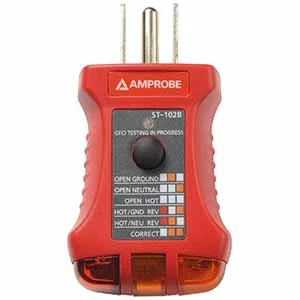
Functionally, the 61-502 detects common wiring problems in standard receptacles and confirms GFCI protective device operation — the same core feature set as the Klein RT210 and Sperry GFI6302. The build quality is clean and professional, with clear indicator markings. Our team found it performed identically to other neon-indicator models in side-by-side testing, which is expected since the underlying detection circuit is well-established technology.
The main reason to choose the Ideal over alternatives comes down to that certification. Home users and casual DIYers won't benefit from it, but licensed electricians who need to document their test equipment for commercial jobs will appreciate having a UL-listed tester in their kit. It is a niche advantage, but an important one for the right buyer.
Pros:
Cons:
The single most important feature distinction among outlet testers in 2026 is whether the model includes GFCI trip testing. Updated electrical codes now require GFCI protection in kitchens, bathrooms, garages, basements, laundry rooms, and all outdoor receptacles. A tester without GFCI capability can verify basic wiring, but it cannot confirm that the ground fault protection actually functions — and that is arguably the more critical safety check. We strongly recommend GFCI-capable models for any buyer unless the tester will only ever be used on non-GFCI circuits. The price difference between basic and GFCI models is typically just a few dollars, making the upgrade a no-brainer.

Neon-indicator testers are passive devices that draw power from the outlet being tested — no batteries required, no maintenance, nothing to charge. They are inherently reliable because there is almost nothing to fail. LCD models like the Klein RT250 add voltage readout and GFCI trip-time measurement, which are genuinely useful for professional inspectors who need quantitative data. However, LCD models require batteries and introduce an additional point of failure. For most home users and general electricians, neon indicators provide all the information needed. LCD testers are worth the premium only when buyers need to document voltage levels or trip-time compliance for inspection reports.

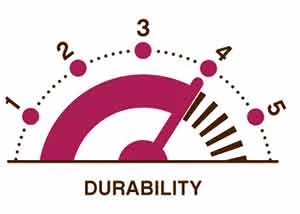
Outlet testers get dropped. It is not a question of if, but when. Models with documented drop ratings — like the Klein RT210's 6.6-foot specification — provide confidence that the tool will survive real-world use. Rubber over-molded grips (as found on the Sperry GFI6302) reduce the likelihood of drops in the first place and add comfort during extended testing sessions. For buyers who test outlets professionally, investing in a drop-rated model saves money over replacing cheaper units that crack after a few falls. Homeowners who keep a tester in a drawer can reasonably prioritize price over ruggedization.

All testers in this roundup work with standard North American 3-prong 120V outlets at 60Hz. The key differentiator is whether the tester also handles extension cords (like the Gardner Bender GFI-3501) or offers certified compliance documentation (like the Ideal 61-502). Buyers should also verify that the tester works with tamper-resistant outlets, which are now standard in new construction — all models we tested plugged in without issues, but some very cheap testers with thin prongs can struggle with the spring-loaded shutters in tamper-resistant receptacles. Just as selecting the right penetrating oil depends on the specific application, choosing an outlet tester means matching capabilities to the types of circuits and receptacles most frequently encountered.


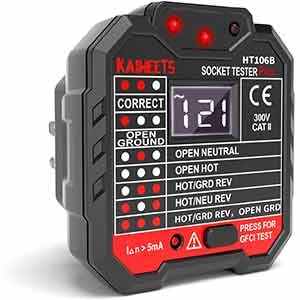
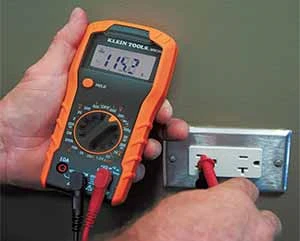
An outlet tester checks the wiring condition of a standard 3-prong 120V receptacle by detecting faults like open ground, open neutral, open hot, reversed hot/neutral, and reversed hot/ground. GFCI-capable models also verify that ground fault circuit interrupter devices trip properly when a fault is simulated. The tester works by analyzing the electrical relationship between the hot, neutral, and ground conductors through indicator lights or an LCD display.
No. Outlet testers detect the most common wiring faults but cannot identify every possible issue. They cannot detect a bootleg ground (where the neutral is jumpered to the ground terminal), cannot measure wire gauge or connection quality, and cannot identify intermittent faults that only appear under load. For comprehensive electrical diagnostics, a multimeter or circuit analyzer is needed in addition to a receptacle tester. An outlet tester is a first-line screening tool, not a complete diagnostic instrument.
The National Electrical Manufacturers Association (NEMA) recommends testing GFCI outlets monthly using either the built-in test button on the outlet or an external GFCI tester. In practice, quarterly testing is a reasonable minimum for residential settings. Commercial and institutional facilities often test GFCI devices monthly or even weekly as part of their safety compliance programs. Any GFCI outlet that fails to trip during testing should be replaced immediately — a non-functional GFCI provides zero shock protection.
The testers reviewed in this guide are designed exclusively for standard 120V, 60Hz, 3-prong North American outlets. They will not work on 240V outlets (such as those used for electric dryers, ranges, or EV chargers) and should never be plugged into one. Testing 240V circuits requires a multimeter or a dedicated 240V tester with the appropriate plug configuration. Using a 120V tester on a 240V outlet can damage the tester and potentially create a safety hazard.
For homeowners and occasional users, an LCD tester is generally not necessary — neon indicator models provide the same pass/fail fault detection at a lower price with no batteries required. For professional electricians and home inspectors who need to document voltage readings and GFCI trip times for inspection reports, the LCD upgrade is worth every penny. The Klein RT250's ability to display trip time in milliseconds is particularly valuable for verifying GFCI compliance with UL standards. The decision comes down to whether quantitative data or simple pass/fail results better serves the buyer's workflow.
If an outlet tester indicates a wiring fault, the outlet should not be used until the problem is corrected by a qualified electrician. Open ground is the most common fault in older homes and means the safety ground conductor is disconnected — appliances plugged into that outlet have no shock protection. Reversed polarity can damage certain electronics and create shock hazards. Open neutral and open hot conditions mean the circuit is non-functional or dangerously miswired. Never attempt to fix wiring faults without proper training and with the circuit de-energized at the breaker panel.


About Malcolm Woods
Malcolm Woods is a technology writer and sustainability advocate with a background in consumer electronics and a long-standing interest in the intersection of technology and environmental impact. He has spent years evaluating tech products — from smartphones and smart home devices to solar-powered accessories — with a focus on real-world performance, longevity, and value. At the site, he covers tech accessory reviews, smart home gear, buying guides, and practical how-to content for everyday technology users.
Go for the FREE Gifts. Or check out for free energy books from our best collection.
Remove Ad block to reveal all the secrets. Once done, hit a button below