
by Malcolm Woods
Are you wondering whether monocrystalline solar panel efficiency is worth paying extra for — or whether the Silfab SLA-M 310W specifically delivers on its promises? The short answer is yes, for most homeowners and off-grid enthusiasts. This panel hits a practical sweet spot between output, durability, and cost that's genuinely hard to dismiss. In this guide, you'll get a complete breakdown: full specs, real-world performance expectations, honest pricing context, maintenance tips, and clear advice on whether this panel belongs in your setup. Explore the full solar and clean energy section for more guides like this one.
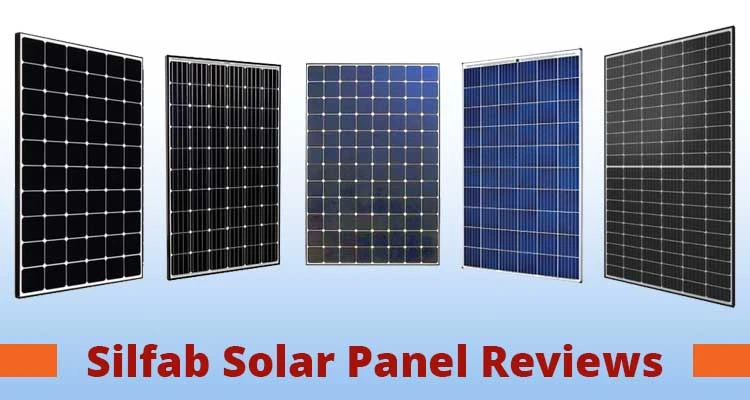
Silfab Solar manufactures its panels in North America — with production facilities in both the United States and Canada. That's not a trivial detail. When you're buying a product backed by a 25-year performance warranty, the manufacturer's stability and proximity matter. The SLA-M 310W sits in Silfab's residential monocrystalline lineup, designed for rooftop and ground-mount installations where space efficiency and long-term output reliability are the priorities.
If you've already started comparing solar panels, you know how quickly the spec sheets blur together. Wattage, voltage, temperature coefficients, degradation rates — it's a lot to absorb. This guide organizes everything into plain language so you can make a confident decision before you spend a dollar.
Contents
Monocrystalline solar panels are built from a single continuous crystal structure of silicon. During manufacturing, silicon is grown into large cylindrical ingots, then sliced into thin wafers. That single-crystal structure allows electrons to flow more freely through the material — which is exactly why monocrystalline panels outperform polycrystalline and thin-film alternatives when you're working within a fixed footprint.
According to the U.S. Department of Energy, monocrystalline panels typically convert between 15% and 22% of incoming sunlight into usable electricity. The Silfab SLA-M 310W lands at around 18.9% — a strong number for residential-grade panels, and one that pays off when roof space is limited. The SLA-M 310W also uses PERC (Passivated Emitter and Rear Cell) technology, which adds a reflective layer to the back of each cell to capture light that would otherwise pass through unused. It's a refinement that extracts a few extra percentage points of output over a standard monocrystalline cell.
Efficiency tells you how much of the available sunlight a panel actually converts into electricity. A higher efficiency rating means more power from the same physical space. For homeowners with limited roof area — or anyone building a compact off-grid system — monocrystalline solar panel efficiency directly determines whether your array can meet your energy goals without adding more panels or a larger mounting structure.
| Specification | Value |
|---|---|
| Peak Power (Pmax) | 310W |
| Cell Type | Monocrystalline PERC |
| Module Efficiency | 18.9% |
| Open Circuit Voltage (Voc) | 40.5V |
| Short Circuit Current (Isc) | 9.93A |
| Max Power Voltage (Vmp) | 33.3V |
| Max Power Current (Imp) | 9.31A |
| Temperature Coefficient (Pmax) | -0.39%/°C |
| Dimensions | 65.6 × 39.4 × 1.38 in |
| Weight | 41.4 lbs |
| Product Warranty | 12 years |
| Power Performance Warranty | 25 years linear (≥80.2% at year 25) |
Spec sheet numbers are measured under Standard Test Conditions — a controlled laboratory setup that rarely matches your rooftop. Real-world output depends on temperature, shading, mounting angle, and local solar irradiance. The SLA-M 310W's temperature coefficient of -0.39%/°C is slightly better than the industry average of roughly -0.40% to -0.45%. It loses a bit less power on hot days compared to lower-quality panels. On a 95°F summer afternoon, that difference compounds across an entire array.
Pro tip: Always size your system using a derating factor of around 75–80% of STC-rated output to account for temperature, soiling, and wiring losses — you'll get far more accurate monthly production estimates than the nameplate wattage suggests.
The panel carries a first-year degradation cap of 2%, with annual degradation capped at 0.7% thereafter — putting minimum output at 80.2% of rated power at year 25. That's in line with industry-standard warranties, though not quite at the 85%+ floor that premium lines like SunPower or Panasonic guarantee.
The Silfab SLA-M 310W typically retails between $180 and $250 per panel depending on your supplier and order volume. For a standard 6kW residential system, you'd need around 20 panels — putting the panel cost alone at roughly $3,600 to $5,000. Add professional installation, racking hardware, an inverter, permits, and wiring, and total system costs generally fall between $15,000 and $25,000 before incentives.
These are ballpark figures. Your actual quote will vary based on your location, roof complexity, and which installer you choose. Get at least three quotes before committing to any one contractor.
The federal Investment Tax Credit (ITC) allows you to deduct a significant percentage of your solar installation cost directly from your federal tax bill. Many states layer on additional rebates, property tax exemptions, or net metering programs that compensate you for excess power sent back to the grid. Taking full advantage of available incentives can reduce your effective out-of-pocket cost by 30% or more. Check your state energy office website and ask your installer specifically which programs apply before you finalize your budget — this step alone can meaningfully change the math on your payback period.
The Silfab SLA-M 310W fits well in several common scenarios:
If you're pairing these panels with a battery bank for off-grid storage, it's worth reviewing our breakdown of Battle Born LiFePO4 deep cycle batteries to understand what a quality storage solution looks like on the other side of your system.
The SLA-M 310W isn't the right panel for every situation. Consider alternatives when:
Solar panels are largely low-maintenance, but ignoring them completely will cost you output over time. Dust, pollen, bird droppings, and leaf debris accumulate on the glass and reduce the light reaching the cells. A reasonable general rule: clean your panels two to four times per year, or after any significant weather event in your area.
Most modern inverters include monitoring apps that track daily and historical production data. Set a baseline during your first full year of operation, then compare month-over-month in subsequent years. A sudden unexplained drop in output — beyond what seasonal variation accounts for — is your earliest signal that something needs attention.
Maintenance note: If your system output drops more than 10% compared to the same month last year without a corresponding weather explanation, inspect for shading changes, soiling, and loose connections before calling a technician — most issues are simpler than they appear.
Shading is one of the most common causes of underperformance in residential solar arrays. Even partial shading on one panel in a series string can reduce output for the entire string — not just the shaded panel. The SLA-M 310W includes bypass diodes that limit how much a shaded cell affects the rest of the panel, but they don't eliminate the problem entirely.
Hotspots are a related issue. They occur when a shaded or damaged cell is forced to dissipate power as heat rather than produce it. Persistent hotspots degrade the cell and reduce long-term output. If you suspect hotspots, a thermal imaging inspection from a certified installer confirms the problem quickly and precisely. For installs where shading is unavoidable, microinverters or DC power optimizers allow each panel to operate independently rather than being dragged down by the weakest link in a string.
MC4 connectors — the standard connection type on the SLA-M 310W — are durable but not infallible. Loose or corroded MC4 connections are a surprisingly common source of gradual output loss. Symptoms include intermittent drops in production data that don't correlate with weather or shading.
If you're deploying the Silfab SLA-M 310W in an off-grid or hybrid setup with a battery bank, your charge controller choice has a direct impact on overall system efficiency. The panel's open circuit voltage of 40.5V makes it compatible with most MPPT controllers designed for 12V, 24V, or 48V battery systems. MPPT controllers are almost always the better choice at this wattage range — they can recover 15 to 30% more usable energy than PWM controllers under real-world conditions.
Our complete guide to selecting a solar charge controller walks you through the entire decision process, including how to correctly size a controller for your specific panel configuration and battery bank voltage. It's worth reading before you buy hardware.
Adding battery storage turns a grid-tied solar array into a genuine energy resilience system. For off-grid applications, your battery capacity needs to cover daily consumption plus a buffer for consecutive cloudy days. The SLA-M 310W's consistent output profile suits both lead-acid and lithium battery chemistries, though lithium iron phosphate (LiFePO4) has become the preferred choice for most new installations due to longer cycle life and higher usable capacity.
Pairing the Silfab SLA-M 310W with a properly sized MPPT controller and a quality lithium battery bank gives you a system built to perform reliably for 15 to 20+ years with minimal intervention. If you're still deciding between PWM and MPPT for your off-grid configuration, our PWM vs MPPT solar charge controller comparison lays out the key differences in plain terms so you can match the right technology to your actual use case.
The Silfab SLA-M 310W achieves a module efficiency of 18.9%. This places it in the solid mid-range for residential monocrystalline solar panel efficiency — above most budget panels but below premium-tier products like SunPower Maxeon, which can reach 22% or higher. For most rooftop and off-grid applications, 18.9% is more than sufficient.
You would need approximately 20 panels to reach 6,200W of installed capacity (20 × 310W = 6,200W). For real-world production estimates, apply a derating factor of around 75–80% to account for temperature, soiling, inverter losses, and wiring resistance. Your installer can calculate a more precise production estimate based on your specific location and tilt angle.
Yes, it's a strong choice for off-grid setups. Its PERC monocrystalline cells perform well in low-light conditions, and its temperature coefficient of -0.39%/°C limits output loss on hot days. Pair it with an MPPT charge controller sized for your battery bank voltage and a quality lithium or AGM battery bank for the most efficient and durable off-grid configuration.
Silfab backs the SLA-M 310W with a 12-year product warranty covering manufacturing defects and workmanship, plus a 25-year linear performance warranty guaranteeing at least 80.2% of rated output at year 25. The linear structure means degradation is capped at an even rate across the full 25-year term — unlike stepped warranties that front-load the acceptable decline.
The Silfab SLA-M 310W is a dependable, well-specified monocrystalline panel that earns its place in both residential rooftop arrays and off-grid systems. If you're ready to move forward, start by collecting quotes from at least three certified installers in your area, verify which federal and state incentives apply to your situation, and size your system carefully against your actual energy consumption data — not just a round-number wish list. A well-designed system built around a reliable panel like this one is an investment that can pay consistent dividends for decades.


About Malcolm Woods
Malcolm Woods is a technology writer and sustainability advocate with a background in consumer electronics and a long-standing interest in the intersection of technology and environmental impact. He has spent years evaluating tech products — from smartphones and smart home devices to solar-powered accessories — with a focus on real-world performance, longevity, and value. At the site, he covers tech accessory reviews, smart home gear, buying guides, and practical how-to content for everyday technology users.
Go for the FREE Gifts. Or check out for free energy books from our best collection.
Remove Ad block to reveal all the secrets. Once done, hit a button below