
by Malcolm Woods
Last spring, a buddy of mine grabbed the first set of golf cart batteries he could find online — no research, no comparison, just a quick buy. By midsummer, he was already shopping for replacements. That frustration is exactly why the Crown vs Trojan batteries debate matters. Both brands dominate the deep-cycle battery market, both power millions of golf carts, and both have loyal followings. But they're not interchangeable, and picking the wrong one for your setup costs real money. If you care about smart energy decisions, this is exactly the kind of breakdown we publish in our solar and clean energy guides.
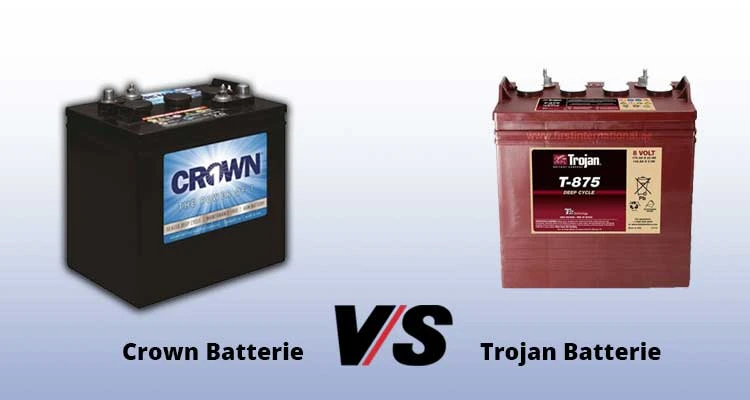
This guide cuts through the marketing fluff. You'll get a direct comparison of specs, pricing, lifespan, and maintenance demands — plus clear advice on which brand suits your situation best.
Whether you're replacing a worn-out pack or setting up a new cart from scratch, here's everything you need to know about Crown vs Trojan batteries before you open your wallet.
Contents
Lead-acid batteries (rechargeable cells that use lead plates and sulfuric acid to store energy) have powered golf carts for decades. They're reliable, widely available, and far more affordable than lithium alternatives for most buyers. Crown Battery and Trojan Battery Company are the two names you'll see recommended most often in golf cart forums, pro shops, and maintenance guides.
Both companies manufacture flooded lead-acid (FLA) and AGM (absorbent glass mat) batteries. For most golf cart owners comparing Crown vs Trojan batteries, the 6-volt flooded deep-cycle models are the primary battleground.
Let's put the two side by side where it actually counts — capacity, cycle life, price, and maintenance requirements. These numbers apply to the most commonly compared models: the Crown CR-235 and the Trojan T-105.
| Spec | Crown CR-235 | Trojan T-105 |
|---|---|---|
| Voltage | 6V | 6V |
| Capacity (20-hr rate) | 235 Ah | 225 Ah |
| Cycle Life (to 80% DoD) | ~750 cycles | ~750 cycles |
| Weight | ~62 lbs | ~62 lbs |
| Average Street Price | $140–$160 | $165–$185 |
| Warranty | 18 months | 18 months |
| Made in USA | Yes | Yes |
| Water fill interval | Every 10–15 charges | Every 10–15 charges |
On paper, these two batteries are nearly identical. Crown edges Trojan on raw capacity — 235 Ah versus 225 Ah — while Trojan commands a higher price. That $25–$40 per battery gap adds up fast when you're buying a set of six for a 36V cart.
This is where opinions diverge the most. Trojan's plates have a well-earned reputation for consistency — batch to batch, you know what you're getting. Crown's plates are thick and durable, but experienced users report wider variance between production runs. Neither is a dealbreaker for recreational use, but Trojan's tighter quality control is why commercial fleet operators stick with it despite the higher cost.
Pro tip: When shopping for either brand, always buy from a dealer with high inventory turnover. Old stock sitting in a warehouse — regardless of brand — loses capacity before it ever sees your cart.
Installation itself is straightforward. Skipping the break-in process is where most people go wrong — and it shortens battery life dramatically on both Crown and Trojan.
If you're running a solar-assisted charging setup for your property or cart storage shed, understanding how long it takes to charge a 12V battery with a solar panel helps you schedule charge cycles intelligently and avoid undercharging either brand.
Warning: Skipping the break-in period on Crown or Trojan batteries can cut your expected cycle life nearly in half. Don't rush it just to get back on the course.
You don't need a full workshop to maintain golf cart batteries properly. But the right gear makes the difference between a pack that lasts five years and one that fails in two.
If you're pairing your cart batteries with a solar charging system, our guide on how to select a solar charge controller covers the same matching principles that apply to any deep-cycle battery bank. And if you're weighing controller types, the PWM vs MPPT comparison breaks down which technology fits which system size and battery configuration.
This is the answer most buyers actually need. Stop second-guessing and use this as your decision framework.
If this is your first golf cart battery replacement and you want solid performance without overpaying, go with Crown. The CR-235 delivers slightly more capacity at a meaningfully lower price. Warranty coverage is comparable, and installation is identical to Trojan. You will not feel short-changed.
If you run your cart daily, operate a small fleet, or need batteries that hold up under constant cycling, Trojan is the right call. Tighter quality control and a wider service network make it the better long-term investment when downtime has a real cost attached to it.
If you're considering skipping lead-acid altogether, our Battle Born LiFePO4 deep cycle battery review covers what the lithium upgrade actually delivers — and whether the three-to-four times higher upfront cost makes sense for your use case. For most golf cart owners, it still doesn't.
These errors apply equally to Crown and Trojan. Avoid them and you'll easily reach 1,000+ cycles on either brand. Make them habitually and you'll be replacing your pack years ahead of schedule.
Here's what you hear consistently from people who've run both brands across multiple replacement cycles:
Ultimately, maintenance habits matter more than brand. A well-maintained Crown pack will outlast a neglected Trojan pack every time. For anyone running a solar-assisted charging system, knowing how to manage battery charging cycles effectively directly extends the usable lifespan of whichever brand you choose.
For most recreational golf cart owners, yes. Crown batteries offer comparable capacity and cycle life at a lower price. Trojan has a slight edge in batch-to-batch consistency and commercial-grade reliability, but for casual weekend use, Crown performs at a very similar level.
With proper maintenance — full charge cycles, regular watering, and clean terminals — Trojan T-105 batteries typically last four to six years under normal recreational use. Daily heavy-use cycling shortens that range to three to four years.
The Trojan T-105 is the most consistently recommended 6V golf cart battery for reliability and service support. The Crown CR-235 is the strongest value pick if you're budget-conscious and committed to proper maintenance habits.
No. Never mix brands, ages, or capacity ratings in the same battery pack. Mismatched cells create pack imbalance, accelerate wear across all batteries, and reduce your overall range and cycle life significantly.
Check electrolyte levels every 10 to 15 charge cycles during active use. In hot weather or high-use seasons, check more frequently. Always add distilled water after a full charge — never before — to prevent overflow and electrolyte dilution.
No special charger is required, but use a smart charger that matches your bank voltage (36V or 48V) and is rated for flooded lead-acid batteries. Avoid chargers designed for AGM or lithium chemistry when running flooded Crown or Trojan cells.
Lithium iron phosphate batteries deliver longer cycle life and zero maintenance, but cost three to four times more upfront. For most golf cart owners, the math doesn't favor lithium unless you plan to keep the cart for a decade or more under heavy daily use.


About Malcolm Woods
Malcolm Woods is a technology writer and sustainability advocate with a background in consumer electronics and a long-standing interest in the intersection of technology and environmental impact. He has spent years evaluating tech products — from smartphones and smart home devices to solar-powered accessories — with a focus on real-world performance, longevity, and value. At the site, he covers tech accessory reviews, smart home gear, buying guides, and practical how-to content for everyday technology users.
Go for the FREE Gifts. Or check out for free energy books from our best collection.
Remove Ad block to reveal all the secrets. Once done, hit a button below